Published:
A Cardan shaft is a mechanical component used in the automotive industry and many other areas of mechanical engineering. This article explains its construction, working principle and applications.
Cardan shaft construction
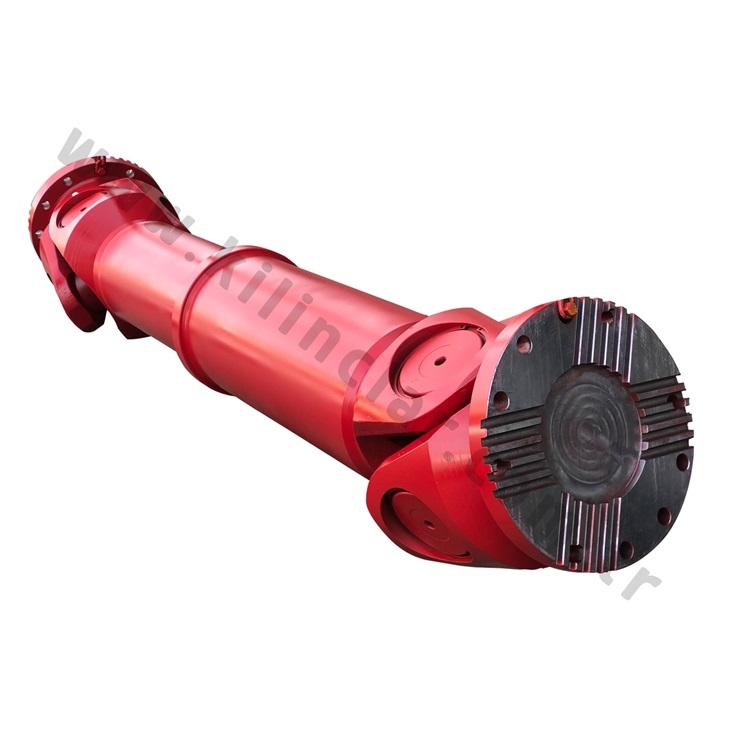
A Cardan shaft transmits power and torque between connected components. One end is typically connected to a motor or transmission, while the other connects to a driven component, axle or another part of the drivetrain. Most assemblies use steel and consist of several components, including flange connections, joints, bearings and a central tube. The flanges connect the shaft to the adjoining equipment, the bearings support movement within the assembly, and the tube spans the distance between the ends while providing the required stiffness.
How a Cardan shaft works
Rotational motion and torque pass through the shaft from the driving component to the driven component. Universal joints allow transmission between axes that operate at an angle to each other. The shaft and its joints transfer the torque; the principle does not depend on gears at opposite ends of the shaft meshing with each other.
Applications
Cardan shafts are used in automotive systems, agricultural machinery, construction machinery, ships, trains and specialised aerospace mechanisms. In a rear-wheel-drive vehicle, the shaft typically carries power from the transmission to the rear axle, which then drives the wheels.
What does “Cardan shaft” mean?
The term describes a shaft assembly that transmits rotary motion between components, including those whose axes are not in line. Although familiar in vehicle drivetrains, Cardan shafts also serve many other applications. They are commonly made from steel and include flange connections, joints, bearings and a central tube.
A Cardan shaft, also known in relevant applications as a drive shaft or propeller shaft, links the drivetrain to the wheels or another driven component. In a rear-wheel-drive vehicle, it carries power and torque towards the rear axle. Beyond automotive use, these assemblies are also found in agricultural and construction machinery, marine and rail equipment, and specialised aerospace applications.
Cardan shafts require strong, durable materials. Steel and alloy steel are common choices, with forged or rolled components used where appropriate. Other materials may be selected for specialised requirements. For example, aluminium can be used where lower weight is important, including certain aerospace applications. Steel remains a widely used choice across industrial applications.
Cardan shaft manufacturing
Manufacturing a Cardan shaft requires precision. An incorrectly manufactured assembly can affect the performance of a vehicle or machine and may cause damage. The work therefore requires experienced, skilled personnel.
The process generally includes the following stages:
- Design: The design is tailored to the customer's needs and the application requirements. It establishes shaft length and diameter, flange dimensions, bearing positions and material selection.
- Material selection: The chosen material must provide the required strength, durability and weight characteristics. Selecting suitable steel or another appropriate material is important for reliable operation.
- Manufacturing: Operations may include cutting steel tubes, welding, forging and machining by milling or turning. These processes shape the components and prepare them for assembly.
- Inspection and testing: Once manufacturing is complete, the shaft undergoes quality checks and testing to confirm that it meets the required operating characteristics.
Reliable Cardan shaft manufacturing combines a design tailored to the customer's application, appropriate material selection and quality control throughout production. Experienced, skilled personnel are important at every stage.